


Funny Inspirational Speakers
Teams Remember Moments, Not Slides
Adam blends humor and his experience into talks that make business growth feel possible and fun.
Helping Teams Grow
Laughter Is an Underrated Growth Strategy
Let’s get this out of the way: no one has ever left a meeting thinking, “Wow. That 47-slide deck really changed my life.”
But they do remember the moment the speaker made them laugh so hard they snorted a little coffee through their nose—and then followed that laughter with an idea that actually stuck.
That’s the power of humor in the business setting. It’s not about telling jokes for the sake of laughs. It’s about connection. And connection is where the real growth happens.
As a motivational speaker focused on helping companies create engaged teams, I have seen firsthand what happens when companies stop treating work like a punishment and start treating people like humans.
Spoiler alert: productivity goes up. Culture improves. And people stop fake-laughing in your meetings.
My goal has never been (and never will be) to be one of your typical “funny inspirational speakers.” I’ve just leaned into what I’ve seen work in countless boardrooms, as well as my own company, Lifted Logic.
What’s worked? Being human. Being real. I don’t talk at audiences, I talk with them, using real stories, real challenges, and lessons that were learned the hard way.
Humor fits naturally into that approach, not because it’s a tactic, but because it’s part of being human. It softens hard conversations and reminds people they don’t have to be perfect to improve.
I’m not interested in delivering a performance people forget by the next morning. I’m interested in helping sales teams think differently, communicate better, and leave with insights they can actually use.
Because in business—and in motivation—being real beats being impressive every time.
Using Humor to Motivate
Humor as a (Not So) Secret Motivational Tool
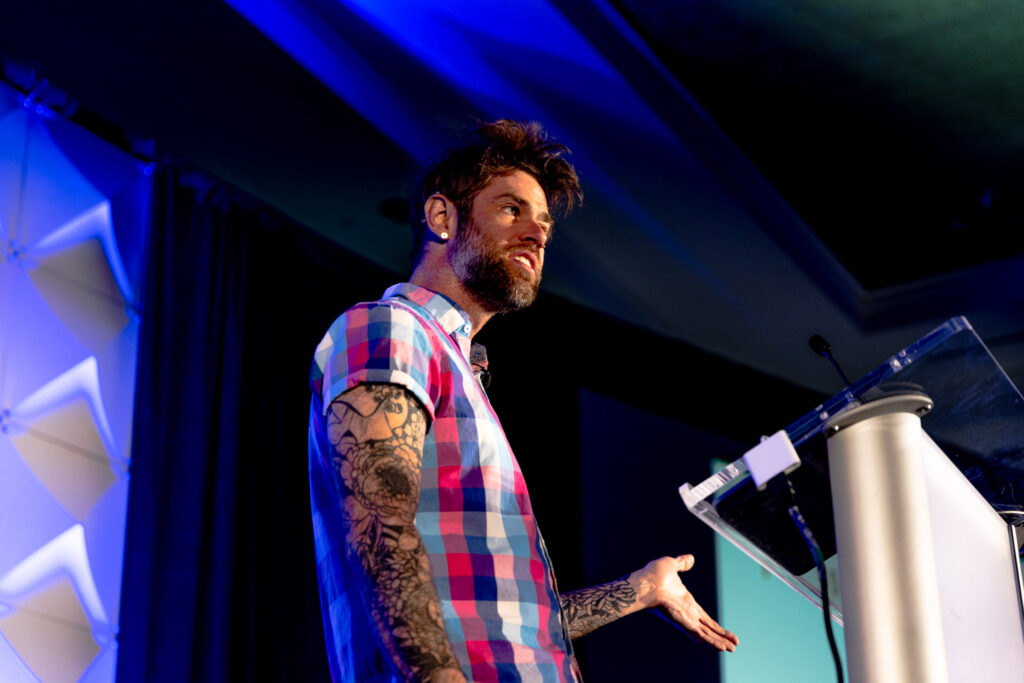
Some leaders worry that using humor in their motivational talks will make them seem unprofessional. But here’s the truth: being forgettable is far more dangerous than being funny (or covered in tattoos!).
When used correctly, humor helps leaders:
- Cut through noise
- Break down hierarchy
- Make messages memorable
It turns “mandatory training” into something people actually want to attend.
When people laugh, their brains wake up. Stress levels drop. Dopamine kicks in. Suddenly, that message about accountability or communication doesn’t feel like a lecture—it feels like a shared moment.
And shared moments build trust. What does trust do? It creates teams that excel.
Making Change Easier
Identifying When Your Process Needs to Change
Most teams aren’t burned out because they work too hard or because they haven’t seen enough funny inspirational speakers. They’re burned out by inefficiency: processes that aren’t clear, don’t work, and leadership that doesn’t listen and just hires run-of-the-mill speakers hoping it’ll make a difference.
It comes from doing the same task three times because no one owns the process. From chasing approvals that shouldn’t exist. From leads falling through the cracks while everyone assumes someone else is handling it. And from being told to “stay motivated” without anyone stopping to ask what’s actually getting in the way.
When leaders address inefficiency head-on—and when they invite honest feedback and are willing to change how work actually happens—burnout starts to lift. Not because people suddenly work less, but because their work finally makes sense.
The Lifted Logic Story
At Lifted Logic, we know firsthand what it’s like to need to change processes. A few years ago, things were good on the surface. Revenue was steady. We were bringing in more business. But the ways our business model was developing started to bring out some new pain points. We’ve been in the website business for awhile, and it turns out, if you give a business a new website, but their internal processes drop the ball… it doesn’t matter how many leads you generate for them.
Our mission is helping businesses thrive, for a long time the vehicle was web design. But more and more, we found ourselves helping clients with the internal aspects of running a successful business: financial reviews, lead callback protocols, hiring and training new employees—you name it.
We wanted to keep helping our clients this way, but that meant our deliverables needed to change. Our whole production process didn’t just need an oil change, the engine needed to be rebuilt.
We spent the company retreat that year in very intentional, very intense discussion where we mapped out our entire process point by point. Then we took months to carefully roll out our new process, shuffle teams, and redefine roles.
I’ll be honest, it was scary. No one likes the idea of change. And at times, the process was frustrating. But the reward of having a better process, a more motivated team, and happier clients was worth it.
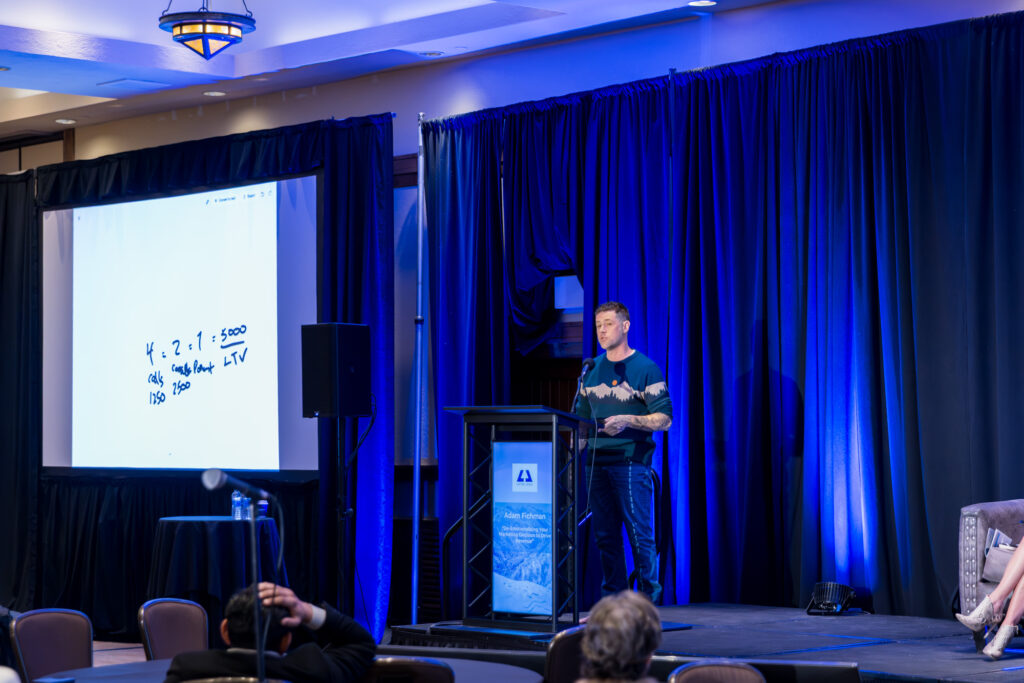
I always include stories like this in my keynote speaking because I want to be real with my audiences, whether it’s for sales teams or corporate executives. When businesses need motivation, they need someone who has been on the front lines and is willing to give actual examples of what’s worked.
Actually Inspire Your Team
Making Hard Conversations Approachable
You’re not wrong to want to liven up your team meetings. It makes sense to look for funny inspirational speakers to do so, but you want someone who’s just as pragmatic as they are hilarious.
I don’t try to motivate teams based on theories alone; I talk about my real-life experience onstage. Because when you’ve lived through dial-up internet, garage startups, and more business pivots than you can count, you learn two things quickly: data matters—and so does not taking yourself too seriously.
Most of my event speaking experience comes from the healthcare industry, where the stakes are high, margins are tight, and burnout is very real. In those environments, motivation can’t be fluff. Teams don’t need exaggerated enthusiasm—they need clarity, honesty, and tools they can actually use the next day.
That background has shaped how I speak to any industry, when businesses need inspiration, they need to see real possibilities not theories. I treat people like professionals who want to improve, not audiences that need to be entertained. I’m open about what works, what doesn’t, and what I’ve personally gotten wrong along the way—because growth doesn’t come from pretending everything is fine.
At Lifted Logic, that same mindset applies. We don’t avoid hard topics. We make them understandable. We don’t hide behind jargon. We talk plainly with our clients about what’s broken and what needs to change to help them succeed.
Because when people feel respected and informed, motivation stops feeling forced and starts becoming sustainable.