
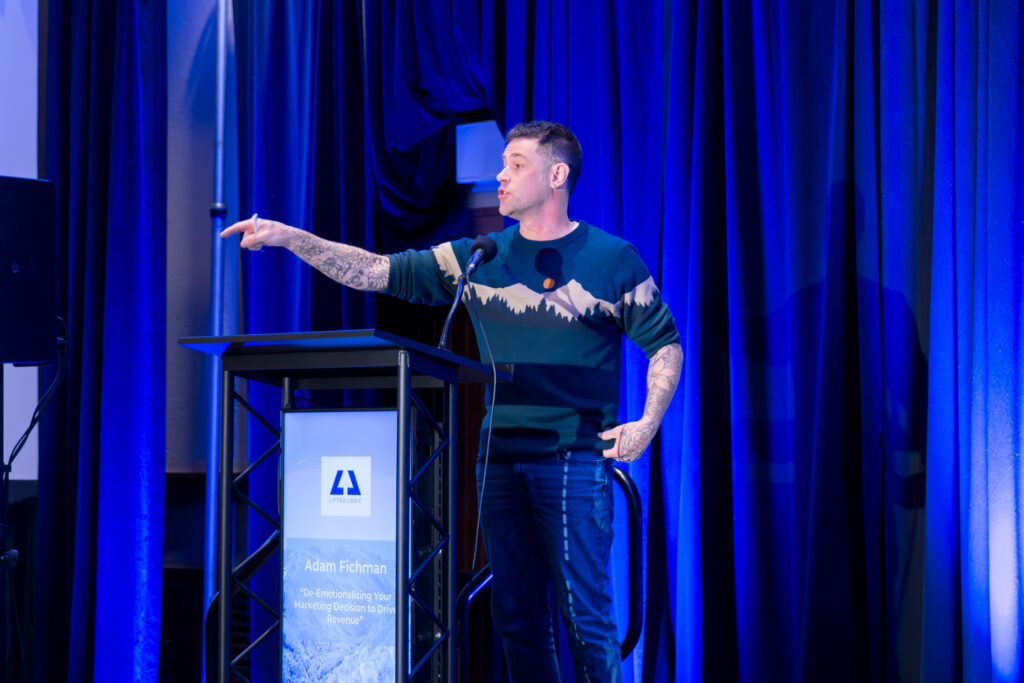
Inspirational Sales Speakers
Make the Call
Every deal reaches a point where activity stops helping and a decision has to happen. Teams move faster when they share a clear standard for recognizing that moment and acting without turning it personal.
Effort Isn’t the Issue. No One Agrees on What Counts.
Adam works inside the conversations teams repeat every week, helping leaders replace polite agreement with decisions the business can actually run.


Founder
Entrepreneur

Educator
CEO
Consultant
Storyteller
Past Clients
Known by Major Brands All Over the World
Adam has worked with companies of all sizes and a wide range of industries, including aesthetics, automotive, retail, sports and entertainment, and manufacturing.













I've spoke at a few events hosted by Lifted Logic and it's been an invaluable experience for all the business owners...whether they are aesthetics or any other industry. This is information nobody gives away for free! And yet here we are giving away all our trade secrets, all of our knowledge, all of the information that we have to be able to help these business owners be successful in their trades.
-Lacy Edwards , Operating Partner | Smart Skin Med Spa
"Adam...he is a visionary. He's someone that brings so much value in education to all of his customers. And you know, this is one of these [consultation & web site building experiences with Lifted Logic] where it's, at the ends of the day we become more friends, than we are customers, which makes being in this industry so much fun!"
-Will Christy , Practice Manager | Beauty Culture Med Spa
"...there is not only the website but the business knowledge that you get. There is just tremendous value add from Adam and his team." We've really enjoyed working with everybody!"
-Tony & Lorie Fields , Part Owners | Regain Functional Medicine + Aesthetics
Industries Served
Arts & Culture
Automotive
Construction
Engineering
Education
Finance
Food/Beverage
HVAC
Manufacturing
Marketing
Medical
Sales
Technology
Travel/Leisure
Adam’s Story
Adam Is the Owner and Founder of Lifted Logic, a Digital Agency in
Kansas City.
As President and Creative Director, Adam helps hundreds of businesses each year to understand their value and create a meaningful, profitable digital experience.

Turn a Moment Into Action
Inspiration Only Matters if it Leads to a Better Decision
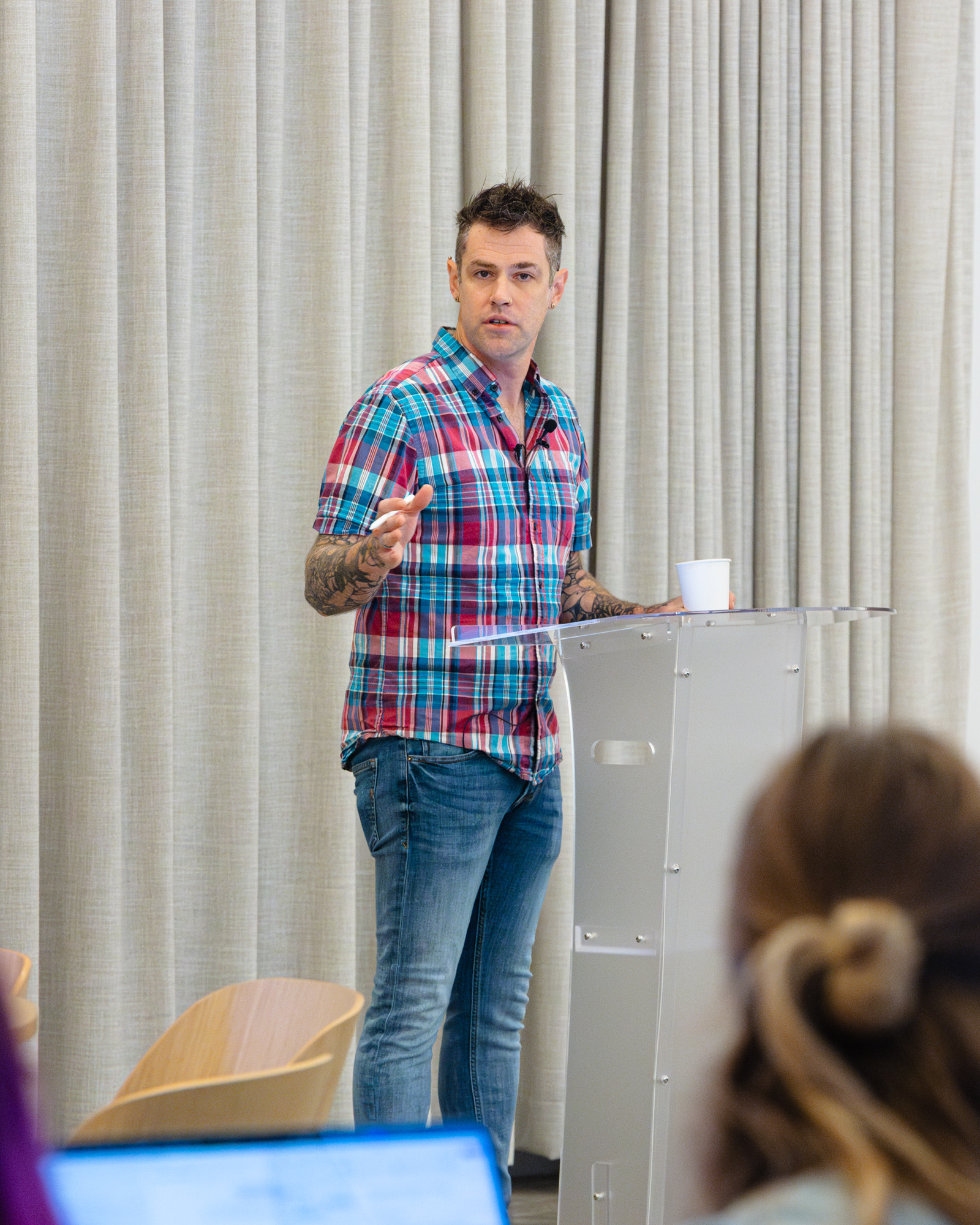
Adam Fichman approaches inspirational sales speaking with a focus on what teams do next. More than energy or morale, his talks establish standards used in pipeline meetings, deal reviews, and coaching conversations.
When a Sales Talk Becomes Operational
An effective sales talk—especially from inspirational sales speakers—gives the team a shared standard they can use when decisions get uncomfortable. More than inspiration as a feeling, it provides a way to decide what counts, what moves forward, and what stops getting attention.
That standard does real work. It creates a common definition the team can share. What qualifies as a real opportunity, what qualifies as a real next step, and what “good activity” looks like when time and workflow both tighten. Those definitions turn opinion into decision-making teams can actually repeat.
Instead of defaulting to personal preference, Adam gives the room a reset point they can use when conversations stall. It’s how Adam pulls the audience out of personal preferences and gets them back into tradeoffs the business can live with. When the bar is clear, debate shrinks and follow-through gets easier to enforce.
That’s what inspirational means here. It’s more than a moment on stage. It’s a message that holds up inside sales conversations after the event ends.
The Slump That Looks Like a Motivation Problem
Most sales slumps don’t start with a disengaged team. Picture a regular weekly sales meeting. Reps come prepared. Activity numbers look fine. Conversations sound thoughtful. Yet the same concerns show up week after week, sitting in the middle of the funnel with no real change in position. The team calls it caution. Leadership calls it the market.
Managers respond by being encouraging. Coaching becomes reassurance instead of correction, because no one wants to be the person who “kills” a deal. Leadership asks for more outreach and more follow-ups, hoping volume will compensate for what’s stuck.
A rep says, “I’m following up,” and the room accepts it as progress. No one asks what the buyer is deciding next, or when that decision is expected. Deals remain stable because they’re familiar, not because they’re moving toward revenue. Over time, the pipeline fills with motion that looks productive, but still leaves the project fragile.
This is where inspirational sales speakers at Adam’s level matter most. He helps teams see the difference between what looks like movement and progress vs. what it actually means for the business. Without a shared standard, people default to what feels safe: more updates, more touch points, more internal discussion. Meetings get longer. Decisions get slower.
Activity still correlates with effort. It just stops correlating with closed-won. When teams can’t clearly define what counts as forward motion, execution spreads out instead of tightening. That’s when a slump quietly settles in.
This pattern shows up across industries, whether it’s enterprise sales, services, or fast-moving growth teams. It’s one of the most common challenges Adam sees when working with sales organizations inside larger corporate environments.
Shaping the Standard Before He Steps on Stage
Customization for an inspirational sales keynote doesn’t mean swapping stories. It means choosing the standard that will matter when the team has to decide what gets time, attention, and follow-up. That’s the gap between inspirational sales speakers that get results vs. a talk that feels good in the moment.
Adam starts with the outcome the business needs next. Not a slogan, not a theme—a result the team can track in the systems they already run.
Then he isolates where workplace execution breaks down. That might show up in the first conversations, where reps book meetings that never turn into real opportunities. It might show up later, where deals advance without clear qualification, then stall when it’s time to ask for a decision. It might show up in handoffs, where marketing, sales, and customer success each believe they’re doing their part, yet the buyer experiences friction.
From there, he chooses 1 enforceable standard leaders can reinforce after the event. Not 10 ideas. One decision rule the team can apply in pipeline reviews, deal reviews, and coaching without needing perfect conditions. That standard keeps the keynote from turning into advice people agree with, then forget.
Moments Where Standards Decide Results
Standards don’t fail because they aren’t written down. They fail because they aren’t used appropriately. This is where the work of inspirational sales speakers either holds up or disappears. When those moments lack clear rules, effort spreads thin and decisions slow down. When the rules are clear, the work tightens.
The Pipeline Review
In many teams, pipeline reviews focus on volume instead of position. Dashboards look healthy at a glance, activity is easy to point to, and everyone can explain why a deal still belongs where it is. Weeks later, those same deals sit in the same stages, unchanged. The issue isn’t visibility; it’s definition.
Giving everyone a clear standard forces the room to answer specific questions: what qualifies this deal to be here, and what evidence proves it belongs in this stage right now? When that definition exists, deals either advance with purpose or exit without drama. Time and attention stop getting spent on opportunities that never had a real path to close.
The Deal Review
Deal reviews break down when “next step” turns into a placeholder instead of a decision. Phrases like “checking in” or “sending a recap” sound active, but they avoid the harder question of what the buyer is being asked to decide next and when that decision needs to happen. Without that clarity, deals sit longer and confidence quietly erodes.
A concrete next step tied to a buyer decision changes the tone of the room. Reps show up prepared to explain what must happen next for the deal to move. Managers coach toward reality instead of optimism. Deals move forward with intent, or they get cleared from the forecast without blame or embarrassment.
Manager Coaching
Coaching loses effectiveness when expectations shift from manager to manager. One rep gets challenged on fundamentals, another gets encouraged to “keep pushing,” and another gets tactical advice without addressing the real constraint. Over time, reps adapt to personalities instead of improving execution.
A clear coaching standard removes that variability. It defines what managers look for, what they correct, and what they reinforce. Reps stop guessing what “good” looks like and start improving against the same criteria. This is where experienced inspirational sales speakers make the difference—by helping teams apply one standard consistently.
What You Should Notice After the Talk
A keynote earns its keep when leaders can point to changes in the work, morale, and productivity. With Adam as your inspirational sales speaker, those signals show up fast—in how deals are described, documented, and advanced.
Within a few days, you’ll hear whether reps describe deals with evidence or with adjectives. “They loved it” turns into what the buyer agreed to do next, what decision is on the table, and what date it’s tied to. When that shift happens, deal reviews stop feeling like theater and start feeling like management.
Then look inside the CRM. Not for a sudden spike in revenue, but for cleaner inputs. Do active opportunities include a dated next step? Do notes capture what the buyer is deciding, or do they read like a running journal? When reps start writing out buyer decisions instead of just vague updates, the system becomes useful again.
By week two, fewer deals sit in a foggy middle state because managers ask for proof earlier in the sales process. The pipeline looks healthier because deals enter late stages with evidence behind them. The team doesn’t get surprised as often.
If leadership wants a straightforward way to measure whether the message stuck, pick one project and track it for 30 days. That could be dated next steps, stage conversion cleanliness, or the rate at which stalled deals get disqualified. Any of those will show whether the team kept the bar alive or let it fade.
When This Talk Helps Most (and When It Doesn’t)
Adam’s keynote isn’t a shortcut to a better quarter. It’s a way to give the team one clear standard to run when the work gets messy and time gets scarce.
It fits when managers reinforce the bar in the normal flow of work, not as a new program, just as a consistent expectation. The same question arises in deal reviews. The same threshold in forecasting. The same proof standard in coaching.
A keynote can’t replace coaching, accountability, or clear expectations. It’s also not the right tool when the team needs training. Training builds skill through practice over time; an inspirational sales speaker sets a shared bar quickly, then relies on leaders to keep it alive.
If leaders won’t reinforce it, the message won’t stick. That’s not a speaker problem; that’s just real talk.






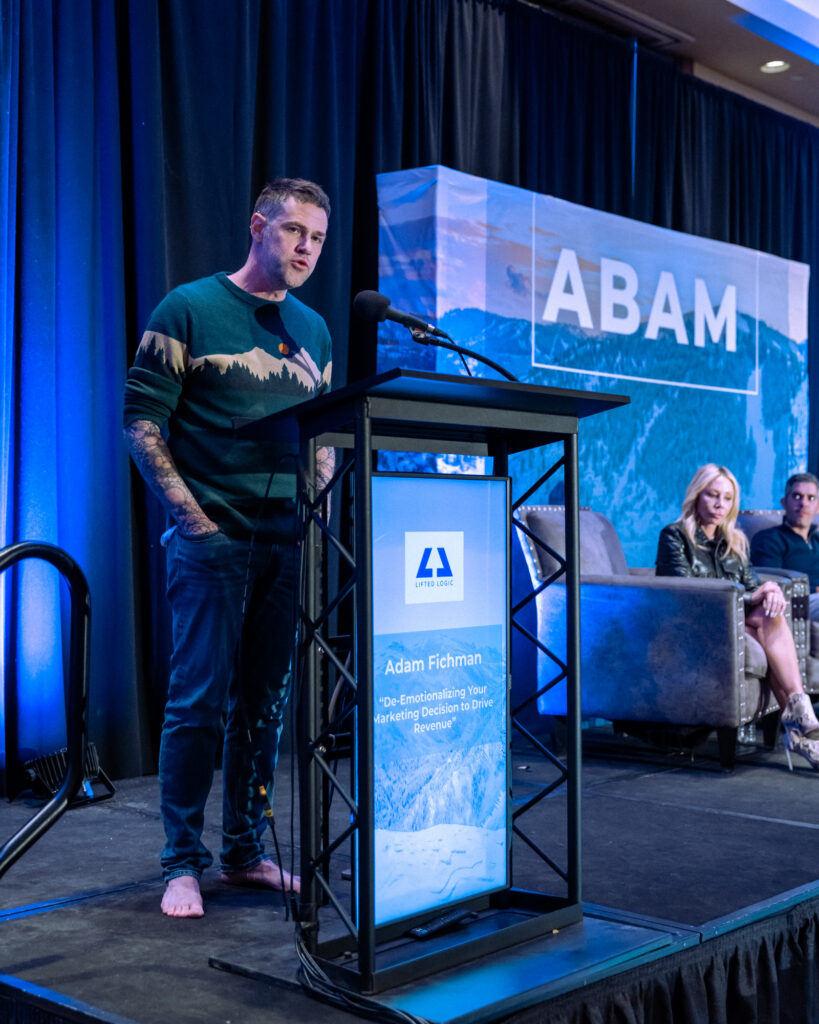

Common Questions Planners Ask Before They Book
Inspirational sales speakers work best when the team needs a clear bar for what counts in deals, workflows, and coaching. Specific training is the right call when reps need practice, feedback, and repetition to build skill over time. Teams that want the keynote reinforced inside the day-to-day often pair it with Adam’s sales consulting or management consulting services to keep the expectation consistent after the event.
Adam may ask planners to share a simple picture of the current sales motion: stage definitions, where deals stall, and a few real examples of “stuck” opportunities. A recent forecast snapshot, a deal review agenda, and a handful of anonymized CRM notes gives Adam the language the team already uses.
Inspirational sales speakers fit SKO when the organization needs a shared standard everyone can understand at the start of the year, before habits harden. They fit a mid-year reset when the year feels fragile and the team keeps circling the same deals with new explanations. They fit corporate events when multiple groups need the same definition of “good” without turning it into a training program.
Inspirational sales speakers (at least, the ones with the plethora of experience that Adam has) work in mixed rooms when the talk anchors on one customer decision moment that touches everyone. Things like qualification, handoff criteria, or next-step ownership. Sales sets the bar for advancing deals, customer success sets the bar for clean handoffs and renewal risk, and marketing sets the bar for lead quality.