Leadership Speakers
from Insight to action
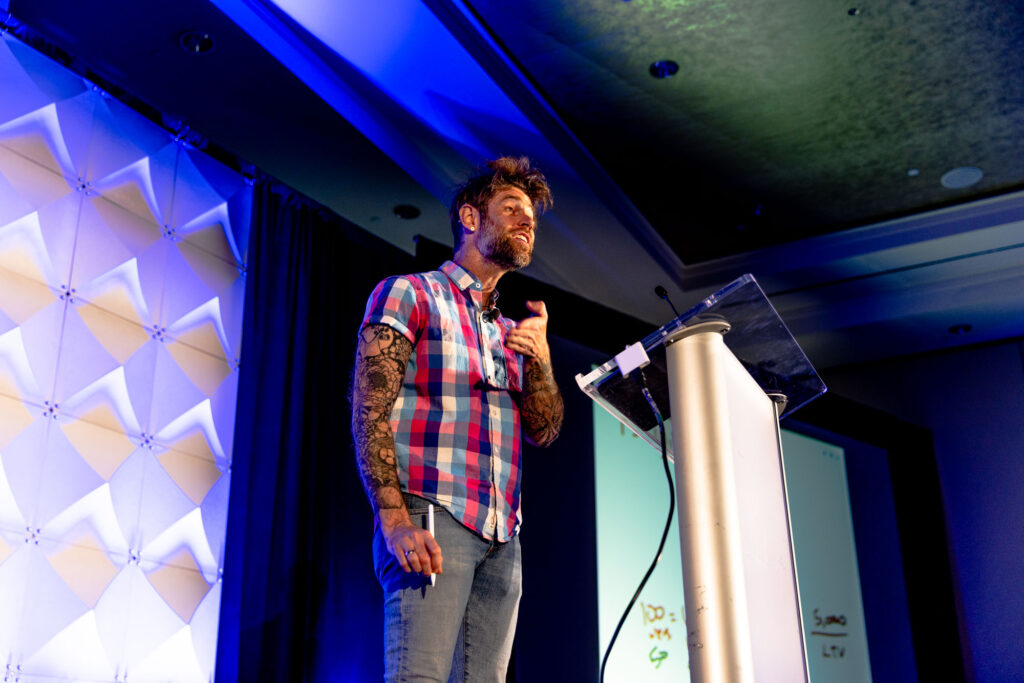
Most leadership speakers deliver ideas. Adam helps leaders turn those ideas into standards teams can repeat, measure, and execute consistently.
Clarity Over Charisma
Most leadership speakers leave teams with a strong message. Few leave them with a standard they can use. Adam helps leaders turn insight into repeatable behavior by defining priorities, clarifying ownership, and setting decision rules that hold up in real meetings.

Founder
Entrepreneur
Educator
CEO
Consultant
Storyteller
Past Clients
Known by Major Brands All Over the World
Adam has worked with companies of all sizes and a wide range of industries, including aesthetics, automotive, retail, sports and entertainment, and manufacturing.












Leadership Outcomes
Clear Decision Rules
Leaders stop debating preferences and start defining the number that decides the next move. Meetings shift from opinion to proof.
Defined Ownership
Teams leave knowing exactly who owns the next step. Fewer follow-up meetings. Fewer stalled projects.
Shared Definitions
Words like “priority,” “qualified,” and “done” get pinned to standards everyone understands. Confusion drops immediately.
Areas of Expertise
Operational Leadership
Operational leadership turns vision into execution. Adam helps leaders define standards, remove bottlenecks, and set decision rules teams can follow.
- Clarifying decision rights across executive and department teams
- Removing the rate limiter slowing growth for companies in the tech world
- Aligning sales and demand generation for modern marketing teams
Leadership Execution
Strong leadership ideas fail when execution breaks down. Adam helps leaders move from broad direction to defined action by clarifying ownership, tightening follow-through, and reinforcing the standards that keep priorities from drifting.
- Turning strategic plans into weekly execution
- Eliminating rework caused by unclear expectations
- Reinforcing standards during growth phases
Executive Alignment
When senior leaders send mixed signals, the rest of the organization stalls. Adam helps executive teams define shared priorities, clarify decision rights, and agree on the standard that determines what moves forward and what can wait.
- Strengthening leadership consistency in complex corporate environments
- Reducing conflict between growth and operations
- Defining clear decision rights across departments
Breaking Down Barriers
Eliminating the Friction Holding Your Team Back
Friction rarely looks dramatic. It shows up as delayed decisions, repeated conversations, shifting priorities, and work that has to be redone. Teams stay busy, but progress feels slower than it should.
Leadership speakers like Adam focus on identifying the specific barrier causing that drag. When leaders name the constraint and clarify ownership, they can restore momentum and make execution predictable instead of reactive.
Clarify Decision Ownership
Friction increases when authority blurs. Teams hesitate because they don’t know who owns the call. Leaders overstep because responsibility wasn’t defined.
Strong leadership speakers address this directly. Adam helps organizations map decision rights clearly:
Who decides.
Who advises.
Who executes.
Who holds the outcome.
When ownership becomes visible, progress speeds up. Projects stop waiting on informal consensus. Teams stop circling decisions that should already be made.
Leadership improves the moment responsibility becomes unmistakable.
Sequence Priorities
Many organizations don’t suffer from a lack of ideas. They suffer from too many ideas at one time.
Leaders announce multiple initiatives. Teams try to execute all of them. Momentum spreads thin. Nothing moves meaningfully.
Adam teaches leaders to sequence effort instead of stacking it.
Think of it like traffic merging onto a highway. When too many cars enter at once, flow slows down. When leaders control how initiatives enter the system, teams move smoothly and predictably.
Leadership speakers who understand operations help leaders decide what moves first, what supports it, and what waits. That sequencing removes friction without adding pressure.
Define What “Done” Means
Rework often hides inside vague expectations.
A leader says, “Get this live.”
A manager hears, “Launch a draft.”
A team member hears, “Finish your portion.”
No one defines what completion requires.
Adam pushes leaders to attach metrics to milestones. What proves success? What evidence confirms progress? What number determines whether the move worked?
When leaders define completion clearly, friction drops. Teams stop revisiting finished work. Managers stop repeating direction. Meetings shrink because updates no longer require interpretation.
Leadership becomes less about reminders and more about reinforcement.
Remove the Constraint
Most teams don’t stall because they lack effort. They stall because one constraint limits output.
It may be:
- Executive indecision
- Manager follow-through
- Lead quality
- Capacity gaps
- Reporting inconsistencies
Adam helps leaders isolate the constraint instead of spreading effort across everything.
Imagine a narrow bridge on a busy road. Widening every street feeding into it won’t fix traffic. You widen the bridge first.
Leadership speakers who understand systems focus on removing the constraint. Once that barrier clears, the rest of the organization moves faster without working harder.
Reinforce Standards Under Pressure
Pressure exposes weak systems.
Deadlines tighten. Markets shift. Revenue dips. Staff turnover increases. In those moments, leaders either revert to noise or return to standards.
Adam builds leadership systems that hold under pressure. He gives leaders simple, repeatable questions:
What matters now?
What proves it?
What changes next?
Who owns it?
Those questions cut through urgency and restore focus. They turn stress into structure.
That’s how friction disappears. Not through motivation alone, but through clarity leaders reinforce consistently.


Frequently Asked Questions
Many leadership speakers focus on inspiration and broad leadership principles. By contrast, Adam focuses on execution. Specifically, he helps leaders define decision rights, clarify ownership, and attach metrics to priorities so direction holds after the event. As a result, instead of leaving teams with quotes to remember, he leaves them with standards they can repeat in meetings the next day.
Organizations usually look for leadership speakers when progress feels slower than it should. Meetings run long. Decisions stall. Teams revisit the same issues. If priorities compete or direction feels unclear, bringing in leadership speakers can help leaders reset expectations and define what moves first.
Yes. Strong leadership speakers understand that context matters. Adam adjusts examples, KPIs, and friction points to match your environment. Whether the pressure sits in growth, operations, or executive alignment, he builds the session around the constraints your leaders actually need to address.
Professional leadership speakers should guide teams to measurable change. After a session with Adam, leaders often report shorter meetings, clearer reporting, and fewer stalled initiatives. Teams understand who controls the next step. Managers gain repeatable questions that keep priorities from drifting. The shift shows up first in conversations, then in execution.
Leadership speakers typically offer keynotes, workshops, or leadership sessions depending on depth. Most keynotes run between 30 and 60 minutes, while workshops and executive sessions can extend 90 minutes or longer based on the level of application required.
Adam works with organizations to determine the right format upfront. A keynote aligns the room. A workshop applies the thinking to real decisions. A leadership session goes deeper with executive teams to define standards that guide the rest of the organization.